
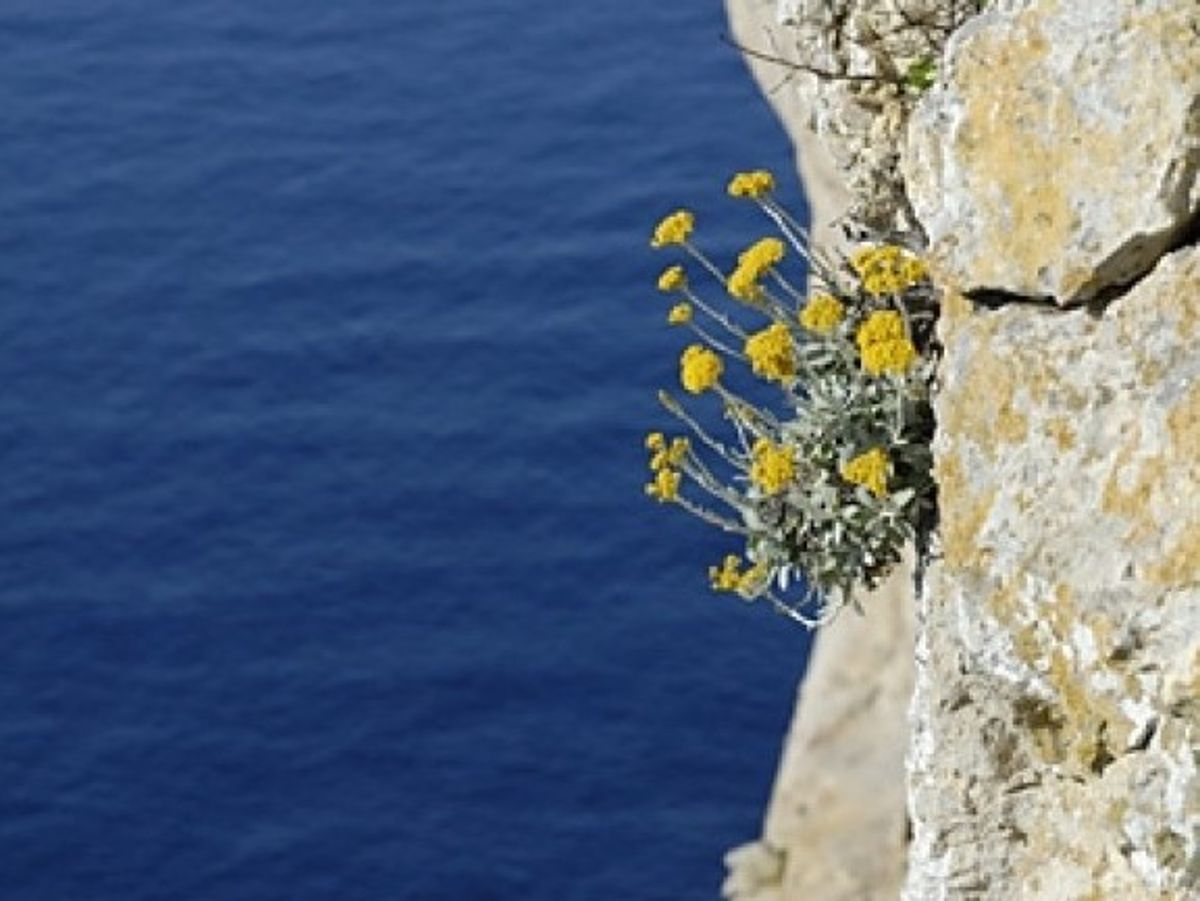
In this post we will talk about a plant with very interesting characteristics, it is a species of the genus Helichrysum, Helichrysum orientale.
This persistent and creeping shrub, from the Asteraceae family, comes from southern Europe, in the Mediterranean region. It is commonly called the immortal shrub, which tells us a lot about its requirements.
It can measure between 30 and 40 centimeters wide by 30 or 40 high; this indicates that we are talking about a low-growing and very compact plant, which does not need to be pruned, since it is a highly branched shrub that if not watered excessively maintains a very dense and compact habit. It has simple leaves, silver-gray in color and with cream-yellow flowers that appear in dense inflorescences. Flowering occurs during the months of June to August.
It is a species belonging to hardiness zone number 7, with an average annual minimum temperature range of -17.7 / -12.3°C, showing resistance to very strong frosts, which means we can plant it anywhere in our latitudes, since it is also indifferent to the type of soil, whether calcareous or siliceous. It also tolerates substrates poor in nutrients and prefers those that contain good water drainage. It is also suitable for inland rock garden areas and, being tolerant to salinity and sea breeze, it also grows well in coastal rock gardens, adapting to rocky and sandy terrains.
Helichrysum orientale has proven to be a very drought-tolerant species. It only requires support irrigation during the 8-10 weeks after planting, if this occurs in autumn. Once well rooted it does not require any irrigation (except those planted in pots). The application of mulch materials around the plant, such as bark or other inorganic materials, is of interest, as they retain soil moisture levels and prevent the appearance of weeds.
Its preferred location is in full sun, where it will perfectly develop its characteristics, suitable in sustainable gardens since its water requirements are very low.
The recommended planting density is 2 to 3 plants per m2. It is an interesting shrub not only for its flowering but for the color of its leaves, which make it suitable year-round. It can also be used in borders and also planted in pots.
It is a highly recommendable and versatile plant that we encourage you to try, and it will surely give you very satisfactory results in your sustainable gardens.